
Update 22.09.2026
Please contact davide.sassera@unipv.it if you are interested.
When applying for an internship please state which project you apply for, why and what motivations and skills you bring. During the interview you will be questioned regarding the reference articles indicated in each project.
Lizard king (Bachelor degree student)
Borrelia burgdorferi sensu lato is a bacterial complex comprising up to 20 different species, some of which are known human pathogens that cause Lyme Disease (LD). In the US, B. burgdorferi sensu stricto is the main specie responsible for LD, while in Europe several species circulate, such as B. garinii, B. afzelii, B. bavariensis, B. valaisiana and B. lusitaniae. In Italy, B. lusitaniae is among the most frequently detected species in molecular screening reports on ticks. Despite its high prevalence in the territory, little is known about human pathogenicity and its enzootic cycle, in which reptiles are hypothesized to play a major role. The goal of this project is to understand the role of the common wall lizards, Podarcis muralis, as a competent reservoir host for this Borrelia species. The project involves the DNA extraction of already-collected samples followed by molecular screening for the presence of Borrelia.
Reference articles:
https://pmc.ncbi.nlm.nih.gov/articles/PMC6332633/
https://pmc.ncbi.nlm.nih.gov/articles/PMC10566445/
Contact @DavideSassera, @SophieMelis
Plasmid-army (Master degree student)
Borrelia burgdorferi sensu lato is a medically relevant bacterial complex, encompassing multiple species, since it is responsible for Lyme Disease (LD). The complex genomic architecture of Borrelia includes a linear chromosome and numerous plasmids, both linear and circular. Plasmids generally harbor genes that are important for infection and pathogenicity, and during in vitro culture can be easily lost. Only a single plasmid – cp26 – is known to host genes necessary for bacterial growth and thus is always maintained during in vitro culture. As regards the other plasmids, little is known about their dynamics and when they are lost. The goal of this project is to understand the plasmid loss dynamics during in vitro culture. To achieve this goal, multiple steps are needed: isolation of Borrelia from the arthropod vector, in vitro culturing, design of Borrelia species-specific primers for detection of different plasmids and analysis of the results.
Reference articles:
https://pubmed.ncbi.nlm.nih.gov/42030948/
https://pmc.ncbi.nlm.nih.gov/articles/PMC10566445/
Contact @DavideSassera, @SophieMelis
Comparative genomics and molecular interactions of bacterial symbionts (Master degree student)
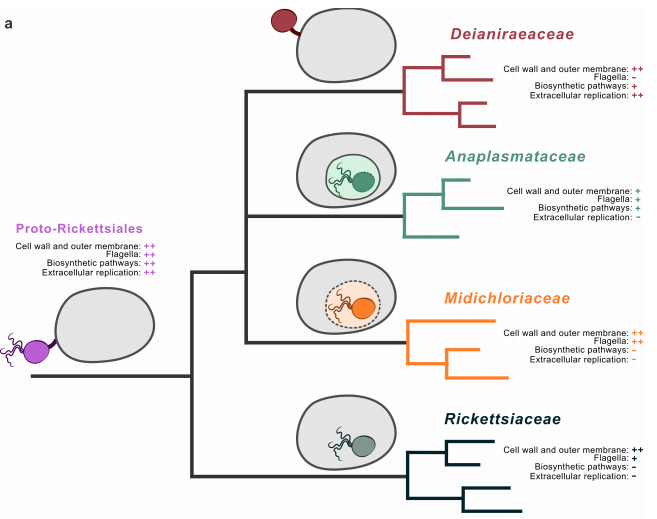
Comparative genomics and molecular interactions of bacterial symbionts (Master degree)
The aim of this project is to sequence and analyze the genomes of bacterial symbionts belonging to the order Rickettsiales (in particular Wolbachia) using bioinformatic methods. Comparative genomic analyses will be carried out to elucidate the evolutionary history of these symbionts and to identify the specific adaptations associated with a host-dependent lifestyle and to gain a deeper understanding of the molecular interactions between the bacteria and their respective hosts. This thesis project will be completely dry.
If you would like to apply for this position, please carefully read these two papers:
https://pubmed.ncbi.nlm.nih.gov/39488869/
https://pubmed.ncbi.nlm.nih.gov/38173299/
Contact @DavideSassera, @LucaErriquez
Genomic epidemiology of pathogens
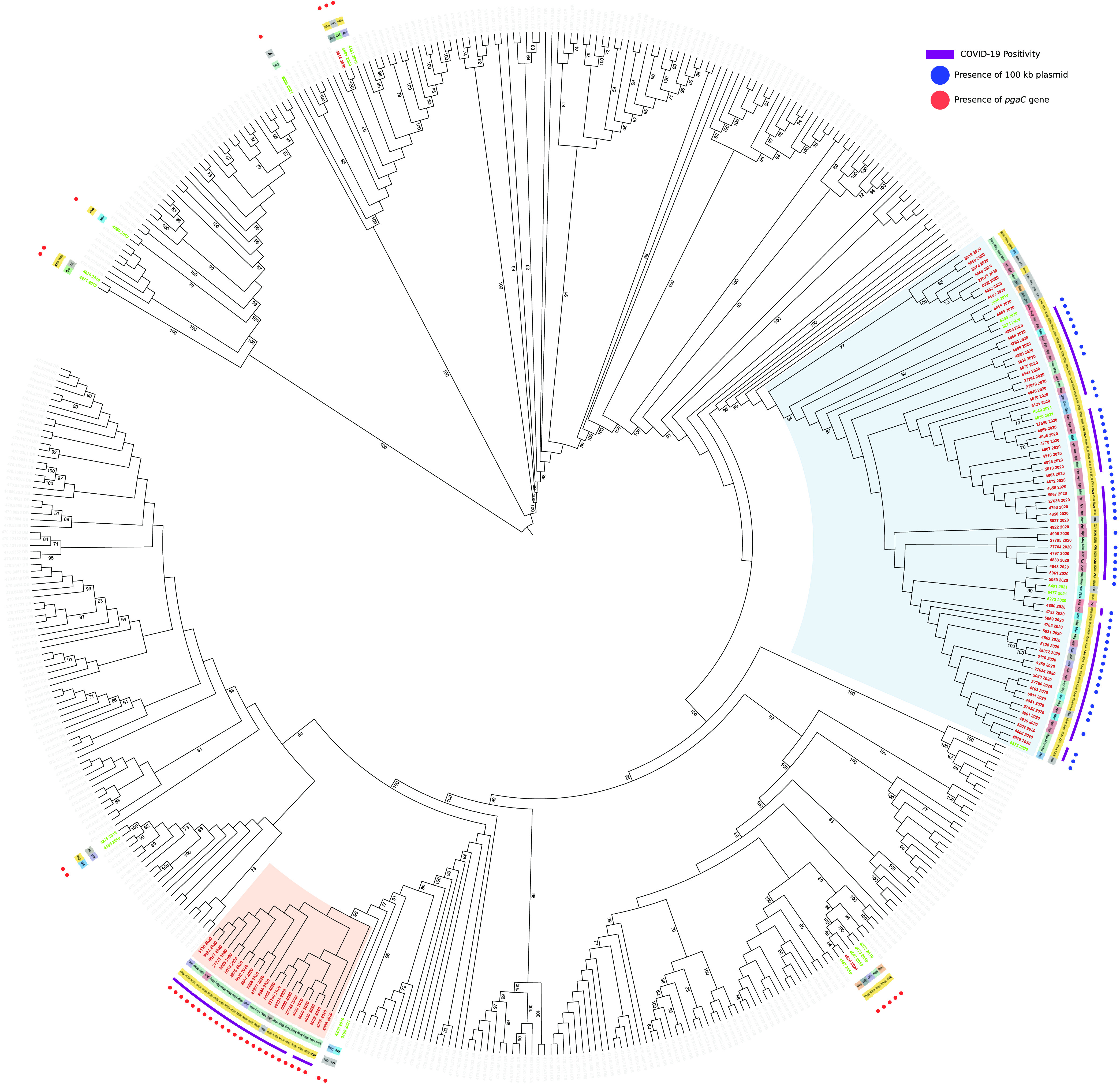
The aim of this project is to analyse by bioinformatic methods the genomes of bacterial and parasitic pathogens, and combine the results with epidemiological and clinical data. This will allow to characterize resistance and virulence traits, to determine epidemiological trajectories and reconstruct outbreaks, but also to reconstruct phylogeny and associate genomic variations to evolutionary trees.
The student will learn the basic techniques of bioinformatic applied to genomic studies. The project is fully bioinformatic with no wet-lab work.
Reference articles:
https://pubmed.ncbi.nlm.nih.gov/31849904/
https://pubmed.ncbi.nlm.nih.gov/38977307/
https://www.biorxiv.org/content/10.1101/2024.11.11.622614v1/
Different sub-project are available:
The project is focused on the genomic epidemiology and evolution of fungal pathogens like Candida spp. using bioinformatic methods, also integrating genomics with clinical data. Main goals will be based on the characterization of resistance and virulence traits, determining epidemiological trajectories and reconstruct possible outbreaks, but also infer phylogenetic reconstruction and associate genomic variations to evolutionary trees. The student will learn the basic techniques of bioinformatic applied to genomic studies. The project is fully bioinformatic with no wet-lab work.
Contact: @DavideSassera, @MichelaVumbaca, @GherardBatistiBiffignandi
The zoonotic parasite Cryptosporidium is a global cause of gastrointestinal disease in humans and animals. We previously investigated the genomic epidemiology of Cryptosporidium parvum in Europe describing the presence of two main populations, one of which causing multiple outbreaks. Future work will aim to study the global evolution of this parasite.
If you want to apply for this position, please carefully read “Bellinzona, Greta et al. “Comparative genomics of Cryptosporidium parvum reveals the emergence of an outbreak-associated population in Europe and its spread to the United States.” Genome research vol. 34,6 877-887. 23 Jul. 2024, doi:10.1101/gr.278830.123”
Contact: @DavideSassera, @GretaBellinzona
In silico structural biology to study Host-Symbiont/Pathogen interactions
The goal of this project is to combine omics data with structural biology, particularly AlphaFold-Multimer, to predict interactions between organisms—such as symbionts and their hosts—uncovering molecular processes like immune evasion, metabolic cooperation, and the manipulation of host cell functions.
Current projects involve:
– Interaction between Midichloria mitochondrii and Ixodes ricinus.
– Interaction between Borrelia and its vectors and hosts.
The student will learn the basic techniques of bioinformatic involving -omics analyses and structural biology. The project is fully bioinformatic with no wet-lab work. Previous bioinformatic experience is a plus but is not required.
The project focuses on reconstructing the Borrelia–human interactome. Borrelia, the bacterium responsible for Lyme disease, is known for its ability to evade the immune system and colonize diverse tissues such as the brain, heart, and skin. While a few molecular interactions underlying these processes have been identified, the vast majority remain unknown. By leveraging AlphaFold-Multimer, our goal is to generate the first computationally predicted interactome, uncovering novel protein–protein interactions that may play key roles in Borrelia pathogenesis.
If you want to apply for this position, please carefully read these two papers:
1) Bellinzona, Greta et al. “Accelerating protein-protein interaction screens with reduced AlphaFold-Multimer sampling.” Bioinformatics advances vol. 4,1 vbae153. 11 Oct. 2024, doi:10.1093/bioadv/vbae153
2) Burke, D.F., Bryant, P., Barrio-Hernandez, I. et al. Towards a structurally resolved human protein interaction network. Nat Struct Mol Biol 30, 216–225 (2023). https://doi.org/10.1038/s41594-022-00910-8
Contact: @Davide Sassera, @GretaBellinzona
Molecular screening of symbiotic microorganisms in arthropods (Bachelor degree student)

This project aims to evaluate the presence, prevalence and abundance of bacterial symbionts in different lineages of arthropods. To this purpose, molecular biology techniques will be used, in particular, the full-length 16S rRNA gene will be sequenced by long reads to characterize the microbial communities of the host. The obtained results will be analysed by dedicated bioinformatic pipelines. This project will allow future investigations on the identified symbionts, e.g. phylogenetic, genomic and transcriptomic analysis.
This project will involve wet laboratory activities, including DNA extraction, PCR, electrophoresis, sequencing set-up on a variegate set of samples, as well as bioinformatic analyses.
Both Master and Bachelor degree students will perform wet laboratory analysis, Master degree students will take part in data analysis.
Reference article:
https://pubmed.ncbi.nlm.nih.gov/34996376/
https://www.sciencedirect.com/science/article/pii/S2001037019303745#b0010